
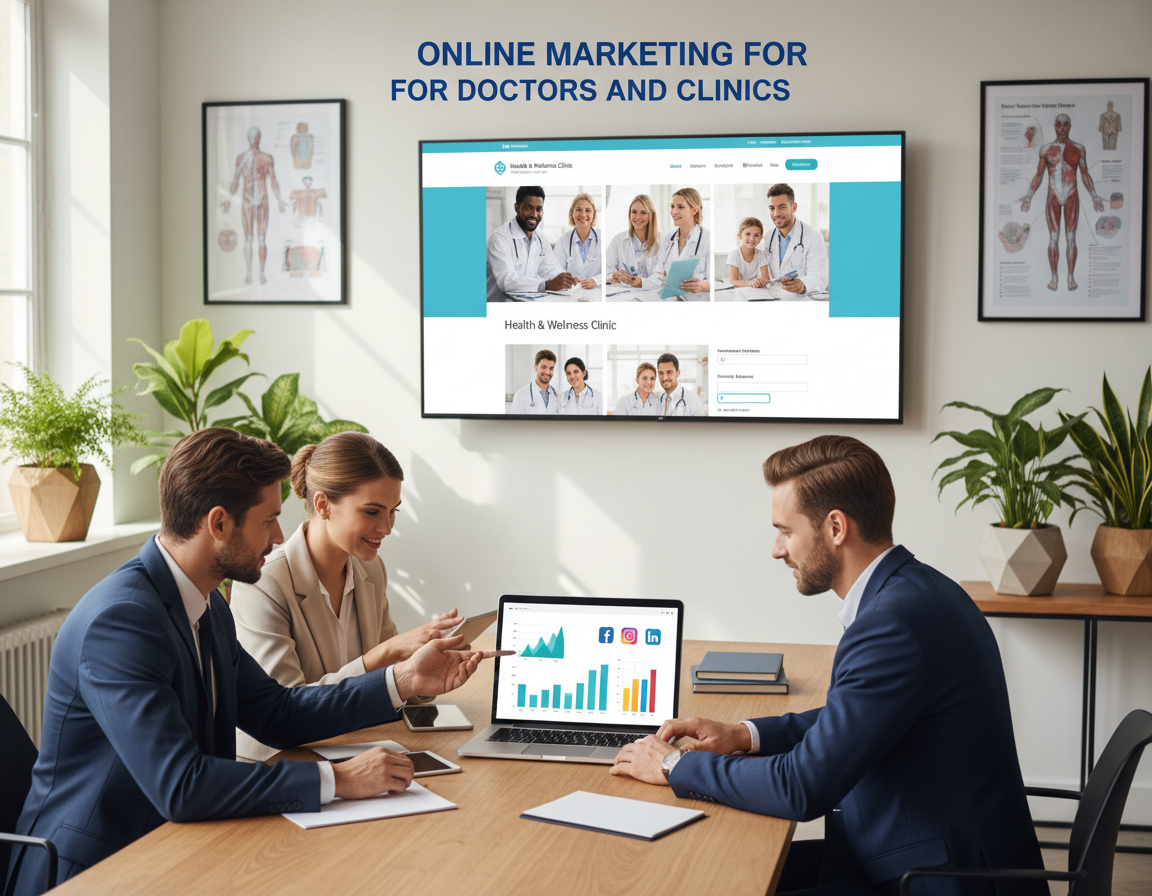
In the U.S., many medical practices struggle with filling their appointment books, even though they have strong clinical reputations. Online Marketing For Doctors And Clinics offers practical strategies that can actually be implemented. These strategies are designed to move searchers into scheduled visits.
Healthcare Digital Marketing Experts
Strong medical marketing strategies combine SEO, Google Ads, social media, and content marketing. These channels are aimed at patients who are actively looking for care. Firms such as Marketing 1 On 1, Officite, and Online Marketing For Doctors specialize in HIPAA-aware websites, local SEO, and reputation management. That approach transforms visibility into measurable growth.
This is a performance-oriented method. Targeted healthcare digital marketing helps increase patient volume while also lifting conversion rates. It also tracks return on investment. The core promise is straightforward: combine integrated channels and a proven framework to generate more new-patient inquiries in months rather than years.
Core Takeaways
- Integrated medical marketing strategies blend SEO, PPC, social media, and content to drive new patients.
- Healthcare digital marketing must be HIPAA-aware and focused on local search and reviews.
- Agencies like Marketing 1 On 1 and Officite offer packaged programs and audits to accelerate growth.
- Measurable tactics—search rankings, ad conversions, and appointment funnels—deliver ROI.
- Short discovery calls or site quizzes often reveal quick wins and a clear timeline for impact.
Why Online Marketing Matters For Medical Practices
Many practices are outstanding at patient care but still face challenges in attracting new patients. Relying solely on clinical skill is not enough anymore. Online Marketing For Doctors And Clinics solves that visibility gap by making services visible where patients are already searching.
The Opportunity Behind Patient Acquisition Challenges
About seventy-five percent of searchers never go past the first page of results. Because of that, local SEO and reputation management become essential tools for earning early visibility. When a clinic uses physician SEO services and targeted advertising well, it can compete for page-one visibility and create a steadier flow of appointments.
Patient growth can happen more predictably when the right channels are targeted. In competitive markets such as New York, a focused strategy can often generate meaningful gains within a few weeks. This rapid growth is especially valuable for clinics needing to fill appointments promptly.
How Talent Without Visibility Fails — The Van Gogh Analogy
An excellent clinician who cannot be found online is much like Vincent van Gogh, whose work was barely recognized in his lifetime. Skill matters, but exposure is what creates demand. Healthcare digital marketing empowers talented physicians to be discovered and chosen by patients.
Effective campaigns integrate SEO, PPC, social media, and content marketing. That synergy helps a practice’s expertise reach people who are actively looking for healthcare services.
Regulatory And Trust Factors In Healthcare Marketing
Medical advertising has to follow HIPAA requirements and healthcare marketing rules. Compliance preserves patient privacy and prevents costly mistakes. When marketing respects those rules, it supports reputation while helping practices avoid penalties.
Reviews and trust signals heavily shape patient decisions. A consistent review-generation process and thoughtful responses to negative feedback help preserve a positive reputation. Combining physician SEO services with reputation management turns visibility into actual appointments.
| Challenge | Marketing Response | Expected Result |
|---|---|---|
| Weak local visibility | Local SEO, optimized Google Business Profile, physician SEO services | Improved search visibility and more inbound calls |
| Weak appointment flow | Targeted PPC and social advertising built around local demographics | More rapid patient growth within weeks |
| Reputation and trust concerns | Review generation, response protocols, HIPAA-aware messaging | Improved conversion and reduced reputational damage |
| Marketing compliance uncertainty | HIPAA-aligned campaigns and legal review | Safer scalable growth through healthcare digital marketing |
Key Medical Marketing Strategies And Channels
Clinics and private practices need a carefully balanced marketing approach. It combines immediate gains with long-term benefits. Paid advertising can attract patients quickly, while SEO and content marketing build trust and long-term visibility.
Physician SEO Services And Search Engine Optimization
Local search results are especially important for clinics focused on specific procedures. Physician SEO services emphasize service pages, local schema, and consistent citations to attract nearby patients. Tracking rankings and organic conversions helps prove whether the strategy is working.
Prioritize long-tail procedure keywords and FAQ content that matches real patient questions. Use structured data so search engines can better highlight hours, reviews, and services in the results. These efforts enhance discoverability and reduce costs over time.
Healthcare PPC Campaigns And Paid Search
Healthcare PPC campaigns can generate traffic quickly when they use location targeting and compliant messaging. Use call-only campaigns, local campaigns, and conversion tracking to measure bookings and calls.
Establish negative keyword lists and stay updated on policy changes to avoid unnecessary spending. Test landing pages and appointment funnels to enhance conversion rates and lower costs per patient.
Social Media And Doctor Social Media Marketing
Doctor social media marketing is useful for educating patients. Use HIPAA-safe content, secure patient consent before sharing stories, and rely on short-form video to reach broader audiences.
Facebook, Instagram, and YouTube make it possible to run targeted ads and nurture prospective patients with remarketing. Engage with followers through educational content and timely responses to comments.
Content Marketing And Video Strategy
Content marketing educates patients and supports SEO efforts. Create blogs, procedure pages, FAQs, and patient journey videos to boost authority and reduce booking barriers.
Video content can improve engagement on both YouTube and Google. A strong approach is to pair written guides with short explainer videos so patients move from research to scheduling more easily.
| Marketing Channel | Core Goal | Key Tactics | Short-run Impact |
|---|---|---|---|
| Search (SEO) | Organic visibility | Citations, local schema, and optimized service pages | Consistent traffic growth over time |
| Paid Search | Immediate patient acquisition | Geo-targeted ads, call-only formats, and conversion tracking | Faster lead flow in days or weeks |
| Social Media | Relationship building and referral support | Short-form video, HIPAA-safe posting, and paid social | Better recall and broader audience reach |
| Educational Content | Trust-building education | Procedure videos, blogs, and FAQs | Higher conversions and lower friction |
Conversion, Website, And Reputation Tactics
A clinic’s website is the place where online advertising efforts turn into real appointments. Begin with a discovery audit to identify gaps in layout, load times, and trust indicators. Use a simple quiz or checklist to evaluate performance and establish priorities for medical website optimization.
User Experience And Responsive HIPAA-Aware Design
Good design should prioritize mobile performance, speed, and accessibility from the start. TLS encryption, minimal PHI in public-facing forms, and clear privacy notices should all be in place. Trust can be strengthened by placing appointment CTAs above the fold and showing credentials, certifications, and accepted insurance details.
Conversion Rate Optimization And Appointment Funnels
Build service-specific landing pages that use focused messaging and single-goal forms. Add scheduling widgets, click-to-call buttons, and retargeting pixels to recover visitors who leave without booking.
Reputation Management And Review Generation
Establish a system to request reviews after visits, using SMS or email with compliant language. Monitor review sites and reply promptly to feedback while protecting patient privacy. Display verified testimonials and use reputation management tools to highlight five-star experiences.
ROI Measurement, CRM Integration, And Analytics
Google Analytics, call tracking, conversion pixels, and the practice CRM should all be connected so leads can be tracked from click to booking. Tag campaigns to measure clinic online advertising performance and allocate budget to channels with the best cost per new patient.
Practical Action Checklist
- Complete a website audit and prioritize the most important medical website optimization fixes.
- Put HIPAA-aware forms and secure scheduling tools in place.
- Launch targeted landing pages and appointment funnels.
- Automate review requests and build reputation management workflows.
- Connect analytics, call tracking, and CRM systems so ROI becomes easier to measure.
Scaling Your Practice With An Agency Partnership (Marketing 1 On 1 — SEO & Digital Marketing Agency)
A partnership with a medical marketing agency can save substantial time on day-to-day marketing work. This approach also helps lower the risk of costly errors. Many of these agencies provide SEO, online advertising, reputation management, and related digital services. They also tend to offer tailored strategies, realistic timelines, and pricing structures matched to your needs.
When comparing agencies, measurable outcomes should be one of the first criteria. A credible agency will usually provide SEO, online advertising, and reputation management as part of its offering. Web redesigns, CRM integration, and analytics support should also be available. It’s essential to find an agency that understands your healthcare business’s unique requirements and compliances.
Agencies typically follow a structured approach. They start with quick wins from paid advertising, which can be seen in days. Organic SEO growth, on the other hand, follows a more predictable timeline. Throughout the process, they provide detailed audits, blueprints, and regular reports to track progress and ROI.
What A Medical Marketing Agency Should Deliver
A strong agency should provide detailed audits and HIPAA-compliant hosting support. They should also build content strategies, prioritize local SEO, and configure Google Ads campaigns. Review generation management is also important, since it helps keep your online presence both strong and compliant.
Proven Tactics With Realistic Timelines
- Paid search and social ads to increase appointment volume within about 14 days.
- Physician SEO services and local SEO usually build steadier organic traffic across the coming months.
- Call tracking and conversion funnels help turn web clicks into booked appointments.
Choosing A Partner And Compliance Checklist
- Confirm HIPAA knowledge, secure hosting, and documented procedures for PHI handling.
- Request case studies and ROI benchmarks, such as reported 3x returns within several months.
- Verify the deliverables, including clinic online advertising, physician SEO services, social media strategy, and analytics reporting.
- Request a timeline for paid-media wins and a separate milestone schedule for SEO.
- Ensure transparent pricing, reporting cadence, asset ownership, and client references.
Agencies should be compared carefully against alternative vendors. Opt for a partner that offers a blend of digital marketing expertise and proven results. They should maintain open communication and adhere to strict compliance standards.
Closing Summary
Online marketing for doctors and clinics helps transform medical expertise into a more reliable stream of patients. By combining SEO, online advertising, social media, content, web design, reputation management, and CRM, practices see significant growth. Clinicians can then focus on delivering care without distraction.
Effective medical marketing strategies start with foundational elements. Those elements include strong local search rankings, a steady review pipeline, and HIPAA-compliant website experiences. Data-driven campaigns, such as paid search and social ads, turn website visitors into actual appointments. This approach ensures measurable ROI when continually optimized.
Working with an experienced agency can accelerate growth significantly. These agencies often provide website audits, patient acquisition plans, and compliance-focused reviews. For U.S. practices aiming to expand, combining immediate paid advertising wins with long-term SEO and reputation efforts is key. This strategy maximizes patient acquisition and fosters sustainable growth.